As a supplier of FRP (Fiberglass Reinforced Plastic) Cage Ladders, I often encounter various technical inquiries from customers. One question that has piqued my interest recently is about the Poisson's ratio of an FRP Cage Ladder. In this blog post, I'll delve into what the Poisson's ratio is, its significance for FRP Cage Ladders, and how it relates to the performance of our products.
Understanding Poisson's Ratio
Poisson's ratio is a fundamental mechanical property that describes the relationship between the lateral strain and the longitudinal strain of a material when it is subjected to an axial load. When a material is stretched or compressed in one direction (longitudinal direction), it will also deform in the perpendicular (lateral) direction. Poisson's ratio, denoted by the Greek letter ν (nu), is defined as the negative ratio of the lateral strain (ε_lateral) to the longitudinal strain (ε_longitudinal):
ν = - ε_lateral / ε_longitudinal
The value of Poisson's ratio ranges from -1 to 0.5 for most engineering materials. For isotropic materials, which have the same properties in all directions, the theoretical upper limit of Poisson's ratio is 0.5. In reality, most common materials have Poisson's ratios between 0.25 and 0.35. For example, steel typically has a Poisson's ratio of around 0.3, while aluminum has a value close to 0.33.


Poisson's Ratio of FRP Materials
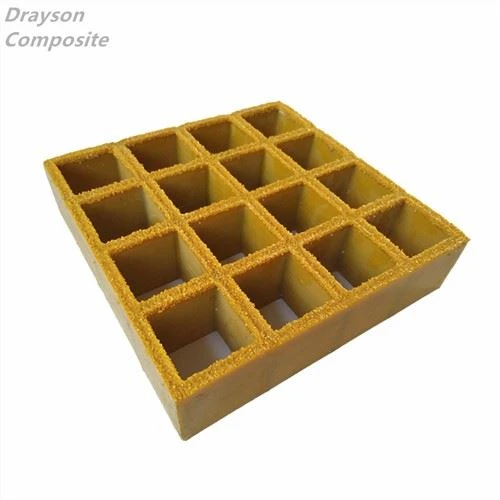
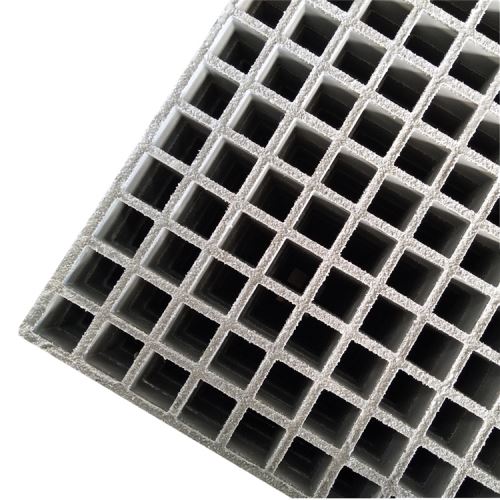
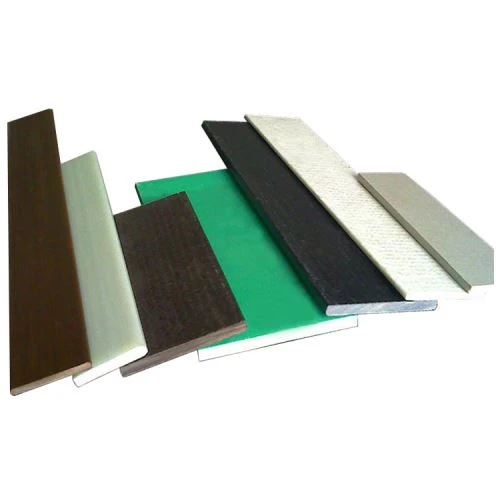
FRP materials are composite materials made of a polymer matrix reinforced with fibers, such as glass fibers. Unlike isotropic materials, FRP materials are anisotropic, which means their properties vary depending on the direction. The Poisson's ratio of FRP materials can be quite different from that of traditional materials and is highly dependent on the fiber orientation, fiber volume fraction, and the properties of the matrix and fibers.
In general, the Poisson's ratio of FRP materials in the fiber direction (longitudinal direction) is relatively low, usually between 0.05 and 0.3. This is because the fibers provide high stiffness and resistance to deformation in the fiber direction. In the transverse direction (perpendicular to the fibers), the Poisson's ratio can be higher, ranging from 0.2 to 0.5, depending on the specific composition and structure of the FRP.
Importance of Poisson's Ratio for FRP Cage Ladders
The Poisson's ratio of an FRP Cage Ladder is an important factor that affects its mechanical performance and design. Here are some key aspects where Poisson's ratio plays a role:
Structural Integrity
When an FRP Cage Ladder is subjected to loads, such as the weight of a person climbing or external forces, the Poisson's ratio determines how the ladder will deform laterally as it is stretched or compressed longitudinally. Understanding this deformation behavior is crucial for ensuring the structural integrity of the ladder and preventing excessive deformation or failure.
Fit and Installation
The Poisson's ratio also affects the dimensional changes of the ladder during installation and use. For example, if the ladder is installed in a confined space, the lateral expansion or contraction due to Poisson's effect needs to be considered to ensure a proper fit and avoid any interference with surrounding structures.
Safety
The deformation behavior of the ladder due to Poisson's ratio can impact its safety. Excessive lateral deformation can lead to instability, reduced load - carrying capacity, and an increased risk of accidents. By accurately accounting for the Poisson's ratio in the design and analysis of FRP Cage Ladders, we can ensure that the ladders meet the required safety standards.
Our FRP Cage Ladder Products and Poisson's Ratio
At our company, we take the Poisson's ratio and other mechanical properties of our FRP Cage Ladders very seriously. We use advanced manufacturing techniques and high - quality materials to optimize the performance of our ladders. Our engineers conduct extensive testing and analysis to determine the Poisson's ratio and other key properties of our FRP materials.
We offer a wide range of FRP Cage Ladder products, including Corrosion Resistance FRP Caged Ladder, Fixed FRP Cage Ladder, and FRP Cage Ladder Safety Yellow. Each product is designed to meet specific customer requirements and industry standards.
Our corrosion - resistant FRP Cage Ladders are ideal for use in harsh environments, such as chemical plants, wastewater treatment facilities, and coastal areas. The low Poisson's ratio in the fiber direction helps maintain the ladder's shape and structural integrity even when exposed to corrosive substances.
The fixed FRP Cage Ladders are designed for permanent installations and are engineered to withstand heavy loads. By carefully considering the Poisson's ratio in the design, we ensure that these ladders provide stable and reliable performance over their service life.
Our safety - yellow FRP Cage Ladders are highly visible and are often used in industrial settings where safety is a top priority. The understanding of Poisson's ratio allows us to design ladders that can withstand the dynamic loads and stresses associated with normal use while maintaining their safety features.
Contact Us for FRP Cage Ladder Procurement
If you are interested in our FRP Cage Ladder products or have any questions about Poisson's ratio or other technical aspects, we encourage you to contact us. Our team of experts is ready to assist you in selecting the right ladder for your specific needs and to provide you with detailed technical information and support. Whether you need a standard ladder or a custom - designed solution, we have the experience and capabilities to meet your requirements.
References
- Callister, W. D., & Rethwisch, D. G. (2011). Materials Science and Engineering: An Introduction. John Wiley & Sons.
- Gibson, R. F. (1994). Principles of Composite Material Mechanics. CRC Press.
- Mallick, P. K. (2007). Fiber - Reinforced Composites: Materials, Manufacturing, and Design. CRC Press.