As a professional FRP handrail supplier, I often receive inquiries about various technical aspects of our products. One frequently asked question is "What is the coefficient of thermal expansion of FRP handrail?" This question is crucial as it directly relates to the performance and durability of the FRP handrails in different environments.
Understanding the Coefficient of Thermal Expansion
The coefficient of thermal expansion (CTE) is a measure of how much a material expands or contracts when its temperature changes. It is defined as the fractional change in length or volume per unit change in temperature. For most materials, a higher CTE means that the material will expand or contract more significantly with temperature variations.
In the case of FRP (Fiber - Reinforced Polymer) handrails, understanding the CTE is essential. These handrails are used in a wide range of applications, from industrial settings to outdoor public areas. They may be exposed to extreme temperature fluctuations, from scorching summers to freezing winters. If a material has a very high CTE, it can lead to problems such as warping, cracking, or loosening of the handrail components over time.
Coefficient of Thermal Expansion of FRP Handrails
The CTE of FRP handrails typically ranges from 2.0 to 3.5 x 10⁻⁵ in/in/°F (3.6 to 6.3 x 10⁻⁵ m/m/°C). This value is relatively low compared to some other construction materials, such as steel or aluminum. For example, steel has a CTE of approximately 6.5 x 10⁻⁶ in/in/°F (11.7 x 10⁻⁶ m/m/°C), and aluminum has a CTE of about 12 x 10⁻⁶ in/in/°F (21.6 x 10⁻⁶ m/m/°C).
The relatively low CTE of FRP handrails gives them several advantages. Firstly, they are more dimensionally stable in varying temperature conditions. This means that they are less likely to experience significant changes in shape or size due to temperature differentials. For instance, in areas with large daily temperature swings, an FRP handrail will maintain its structural integrity better than a handrail made from a material with a higher CTE.
Secondly, the low CTE of FRP handrails reduces the stress on the mounting hardware. When a material expands or contracts, it exerts forces on the components that hold it in place. With a lower CTE, the forces exerted on the mounting brackets and fasteners are minimized, reducing the risk of loosening or failure of the mounting system over time.


Factors Affecting the CTE of FRP Handrails
The CTE of FRP handrails can be influenced by several factors. One of the most significant factors is the type of resin used in the manufacturing process. Different resins have different thermal properties, and this can directly affect the overall CTE of the FRP material. For example, epoxy resins generally have a lower CTE compared to polyester resins.
The fiber content and orientation also play a role in determining the CTE. Higher fiber content can help to reduce the CTE, as the fibers have a lower thermal expansion compared to the resin matrix. Additionally, the orientation of the fibers can affect the anisotropy of the thermal expansion. In some cases, the CTE may be different in different directions within the FRP material due to the fiber orientation.
The manufacturing process can also impact the CTE. Proper curing and molding processes ensure that the resin and fibers are properly integrated, resulting in a more uniform material with consistent thermal properties. Any defects or inconsistencies in the manufacturing process can lead to variations in the CTE.
Applications and Significance of Low CTE in FRP Handrails
The low CTE of FRP handrails makes them suitable for a wide range of applications. In industrial settings, such as chemical plants and refineries, where the temperature can vary significantly due to process operations, FRP handrails can provide reliable and long - lasting service. Their dimensional stability ensures that they do not interfere with other equipment or structures, and they can withstand the harsh environmental conditions.
In outdoor applications, such as bridges, walkways, and buildings, FRP handrails perform well in different climates. Whether it's a hot and sunny day in the desert or a cold and icy winter in a northern region, the low CTE helps the handrails to maintain their shape and functionality.
Moreover, for architects and designers, the low CTE of FRP handrails offers more design flexibility. They can design complex and precise structures without having to worry too much about the material's expansion or contraction causing major issues.
Related Products in Our FRP Handrail Lineup
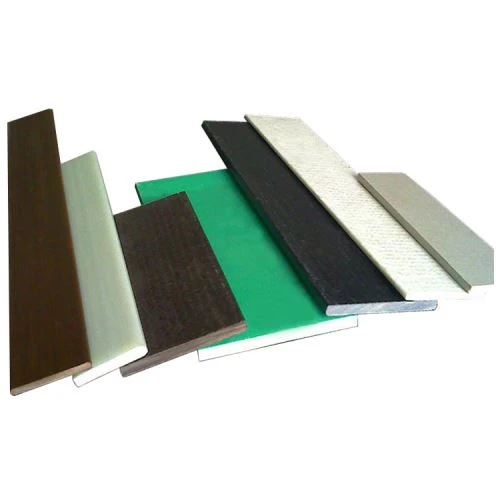
We offer a comprehensive range of FRP handrail products to meet different customer needs. If you are looking for additional protection at the base of the handrail, our FRP Kick Plate is an excellent choice. It not only adds an extra layer of durability but also enhances the overall aesthetic of the handrail system.
Our Fiberglass Railing Systems are designed to provide a complete solution for various applications. These systems are easy to install and offer high strength and corrosion resistance.
For those who prefer a more modern and sleek design, our Fiberglass Square Handrail System is a popular option. It combines style and functionality, making it suitable for both commercial and residential projects.
Contact Us for Your FRP Handrail Needs
If you are interested in learning more about our FRP handrails or have specific requirements for your project, we encourage you to contact us. Our team of experts is ready to assist you with product selection, technical advice, and pricing information. We are committed to providing high - quality FRP handrail products that meet your expectations and ensure the safety and durability of your structures.
References
- "Fiber - Reinforced Polymer Composites: Materials, Manufacturing, and Design" by Mohamed S. El - Sayed
- Industry reports on FRP materials and their applications in construction.