FRP (Fiberglass Reinforced Polymer) is a new type of functional construction material composited of fiber reinforcement and resin matrix. Boasting unique properties of lightweight high strength and superior corrosion resistance & durability, it gradually replaces traditional materials such as steel and concrete. Widely adopted in structural reinforcement, bridge engineering, rail transit, marine engineering and many other sectors, FRP has become a core material facilitating lightweight and long-service-life development of modern engineering.
Lightweight Yet High-Strength
Its density is about 1/4 that of steel and 2/3 that of aluminum, yet its tensile strength far exceeds that of ordinary steel. That means lower foundation costs, easier handling, and simpler installation.
Applications: Bridges, vehicles, boat hulls, and sporting goods-anywhere you want to cut weight without cutting strength.
Superior Corrosion Resistance & Long Service Life
It resists acids, alkalis, salt spray, organic solvents and humid environments.
In harsh conditions including chemical plants, coastal areas and sewage projects, its service life can exceed 20 years, far better than carbon steel (10–15 years).
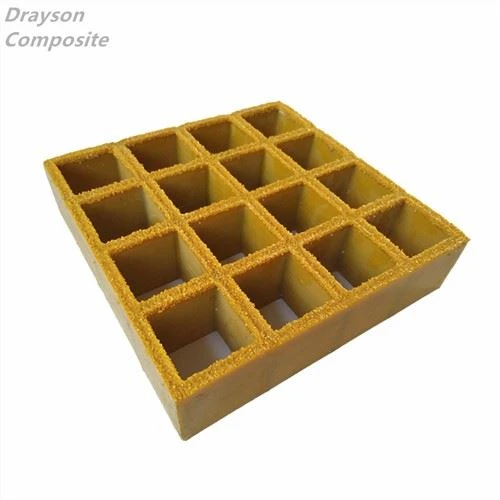
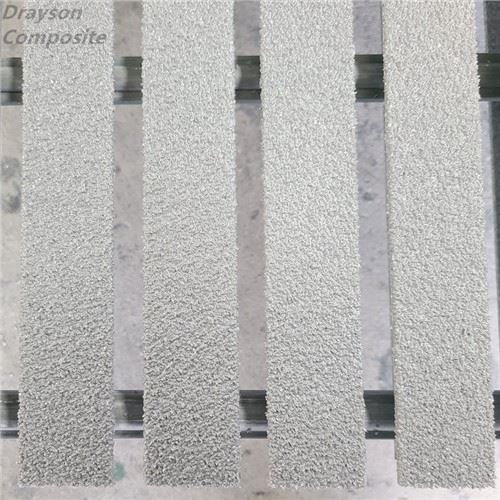
Applications: Chemical storage tanks, pipelines, wastewater treatment equipment, offshore platforms, anti-corrosion gratings.
Excellent Electrical & Thermal Insulation Performance
Electrical Insulation: It maintains stable dielectric properties at high frequencies and enables unobstructed penetration of electromagnetic waves, suitable for electrical equipment, radar and communication facilities.
Thermal Insulation: Its thermal conductivity is merely 0.1%–1% that of metals. It provides effective thermal insulation, flame resistance and resistance to instantaneous ultra-high temperatures.
Applications: Electrical equipment enclosures, insulating gratings, thermal insulation layers for high-temperature equipment, fireproof components.
High Design Flexibility & Customization
A variety of fiber reinforcements are optional, including glass fiber, carbon fiber and aramid fiber. The laminate orientation and resin system can also be adjusted to customize target strength, stiffness, temperature resistance and anti-corrosion grades as required.
Complex curved surfaces, hollowed-out shapes and sandwich structures can be integrally molded in one single process without welding or splicing, which eliminates stress concentration risks at joints.
Applications: Special-shaped building components, vehicle & ship shells, customized mechanical parts.
Excellent Process Performance & High Construction Efficiency
Diversified molding processes are available, including hand lay-up, compression molding, pultrusion, filament winding and vacuum infusion. It fits both small-batch complex parts and mass-produced standard products.
Lightweight features facilitate easy transportation. Products can be prefabricated in factories and rapidly assembled on-site, which drastically shortens construction periods and cuts labor and hoisting costs.
Applications: Modular buildings, rapid construction bridges, prefabricated anti-corrosion facilities.
Excellent Elasticity & Fatigue Resistance
FRP behaves like a spring under load and quickly recovers its original shape after deformation, effectively absorbing impact and vibration.
It resists fatigue cracking under long-term alternating loads, making it ideal for dynamically loaded structures such as bridges and vehicle chassis.
Low Maintenance & Superior Overall Cost-Effectiveness
No rust prevention or anti-corrosion coating is required, enabling nearly maintenance-free operation. Its life-cycle cost is lower than that of carbon steel and stainless steel.
Thanks to its light weight, fast installation, long service life and minimal maintenance demand, it delivers superior cost performance over the long term.
Typical Applications
Chemical & Environmental Protection: Storage tanks, pipelines, desulfurization towers, and wastewater treatment gratings.
Building & Municipal Infrastructure: Bridges, guardrails, manhole covers, daylighting panels, and decorative architectural components.
Transportation & Vehicles: Boat hulls, railcar bodies, instrument panels, and charging station enclosures.
Electrical & Insulation: Insulating ladders, cable trays, radomes, and electrical housings.
Marine Engineering: Offshore platforms, fenders, watercraft, and underwater components.